Museo Popoli e Culture
Pontificio Istituto Missioni Estere (P.I.M.E)
The Museo Popoli e Culture of the Pontificio Istituto Missioni Estere was founded in 1910 as the “Indo-Chinese Ethnographic Museum”. Its collections are the result of missionary activity carried out in Asia, Africa, Oceania, and Latin America. The first objects were brought to Italy by Father Carlo Salerio, who left for Papua New Guinea in 1852; many of these artifacts were destroyed in the bombing of Milan in 1943. In Brazil, PIME missionaries arrived in 1946, spreading mainly through the Amazonian regions, where the dioceses of Macapá, Parintins, Manaus, and Belém were founded, in the south of Mato Grosso on the border with Paraguay, where the diocese of Jardim was created, and in the central-southern part of the country, where the missionaries established more than seventy parishes in the states of São Paulo, Paraná, Santa Catarina, Minas Gerais, Rio de Janeiro, and Sergipe.
Among the collections, particularly noteworthy is the one donated by Father Enrico Uggé, a PIME missionary from Castiglione d’Adda, who since 1971 has spent much of his life among the Saterê-Mawé villages of the diocese of Parintins (Amazonas). The museum also preserves a small group consisting of two Kuna textile pieces from Panama.
References
Denaro, L. 2012. Un museo per viaggiare, un museo per incontrare. Il museo Popoli e culture, dalla storia al futuro. Milano: Ass. Pimedit.
Gheddo, P. 2000. Pime. 150 anni di missione 1850-2000. Collana: Storia e vita missionaria. Milano: EMI.
Links
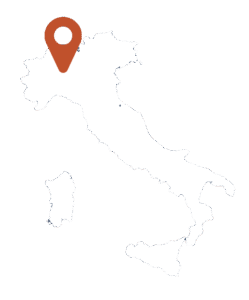
Via Monte Rosa, 81, 20149 Milano (MI)