
The Taíno cotton cemí
A unique artefact in the world
Edited by Cecilia Pennacini (University of Turin)
Scroll editing by Alfonsina Pagano (CNR ISPC)
Revision & accessibility by Alfonsina Pagano (CNR ISPC)
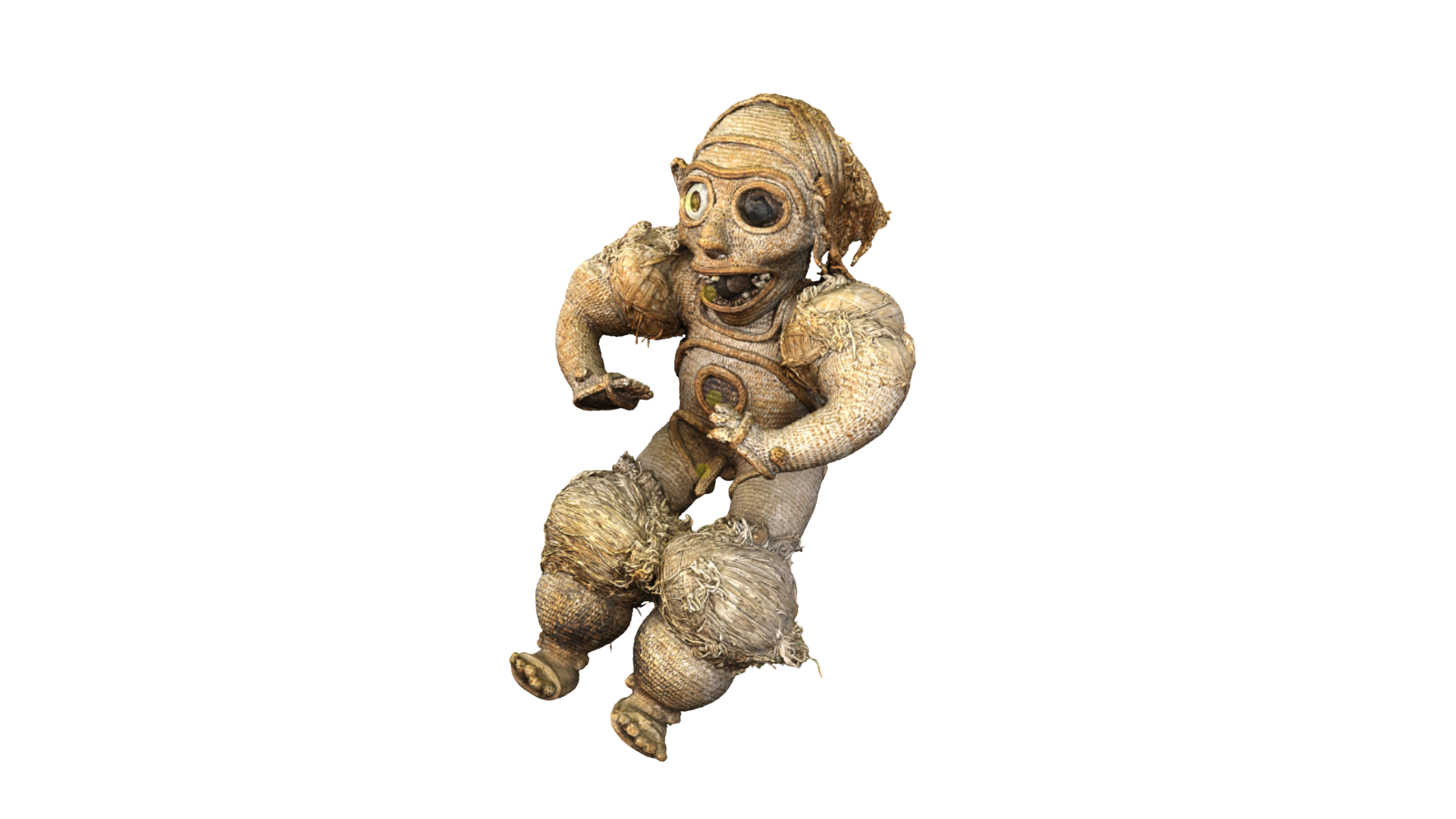
The cotton cemí of Turin is a unique survivor from the Indigenous Caribbean world, an object whose fragility makes its very existence exceptional. Crafted from perishable materials such as cotton and organic fibers, it endured only because it was preserved in the rare shelter of a dry cave, escaping the tropical environments where such objects usually vanish. For the Taíno peoples, cemíes were not simple representations but living spiritual agents, central to political authority and religious practice, capable of mediating between humans, ancestors, and the spirit world.
When Europeans arrived in the Caribbean at the end of the fifteenth century, they encountered Taíno societies that were highly structured and sophisticated. Governed by caciques and cacicas, these communities controlled vast territories, practiced intensive agriculture, and organized collective life around ritual and belief. Major decisions were taken during cohoba ceremonies, where leaders sought guidance from the cemíes, whose presence gave voice to forces beyond the human realm. Originating from Amazonian migrations centuries earlier, the Taíno shared a common spiritual system centered on these sacred figures.
Christopher Columbus and his contemporaries quickly grasped the importance of cemíes. Through the writings of Ramón Pané, the first ethnographer of the New World, European readers gained insight into Taíno mythology and ritual life, even as colonization violently disrupted Indigenous societies. Alliances, resistance, and negotiations shaped the early encounters between Taíno leaders and the Spanish, while cemíes remained objects of reverence and protection.
Centuries later, the cotton cemí resurfaced in Santo Domingo, entering private collections and attracting the attention of scholars and artists. Its journey from the Caribbean to Genoa, and later to Turin, reflects a broader history of collecting, study, and reinterpretation. Donated in 1927 to what is now the Museum of Anthropology and Ethnography of the University of Turin, the cemí became a focal point for research into Taíno culture and Indigenous Caribbean heritage.
Today, the cemí continues to speak across time. Contemporary Neotaíno communities are reclaiming and reimagining ancestral traditions, while scientific investigation has revealed the object’s internal structure and materials through non-invasive technologies. This knowledge now converges in a digital twin: an immersive, interactive representation that allows the cemí to be explored in unprecedented detail. Through this phygital experience, the cotton cemí connects ancient belief systems, colonial histories, and contemporary technologies, offering new ways to encounter a living heritage.
Explore the scrolling journey to learn more!