03 Mar KNOT-led diagnostic campaign on the Codex Magliabechiano at the Biblioteca Nazionale Centrale of Florence
KNOT-led diagnostic campaign on the Codex Magliabechiano at the Biblioteca Nazionale Centrale of Florence
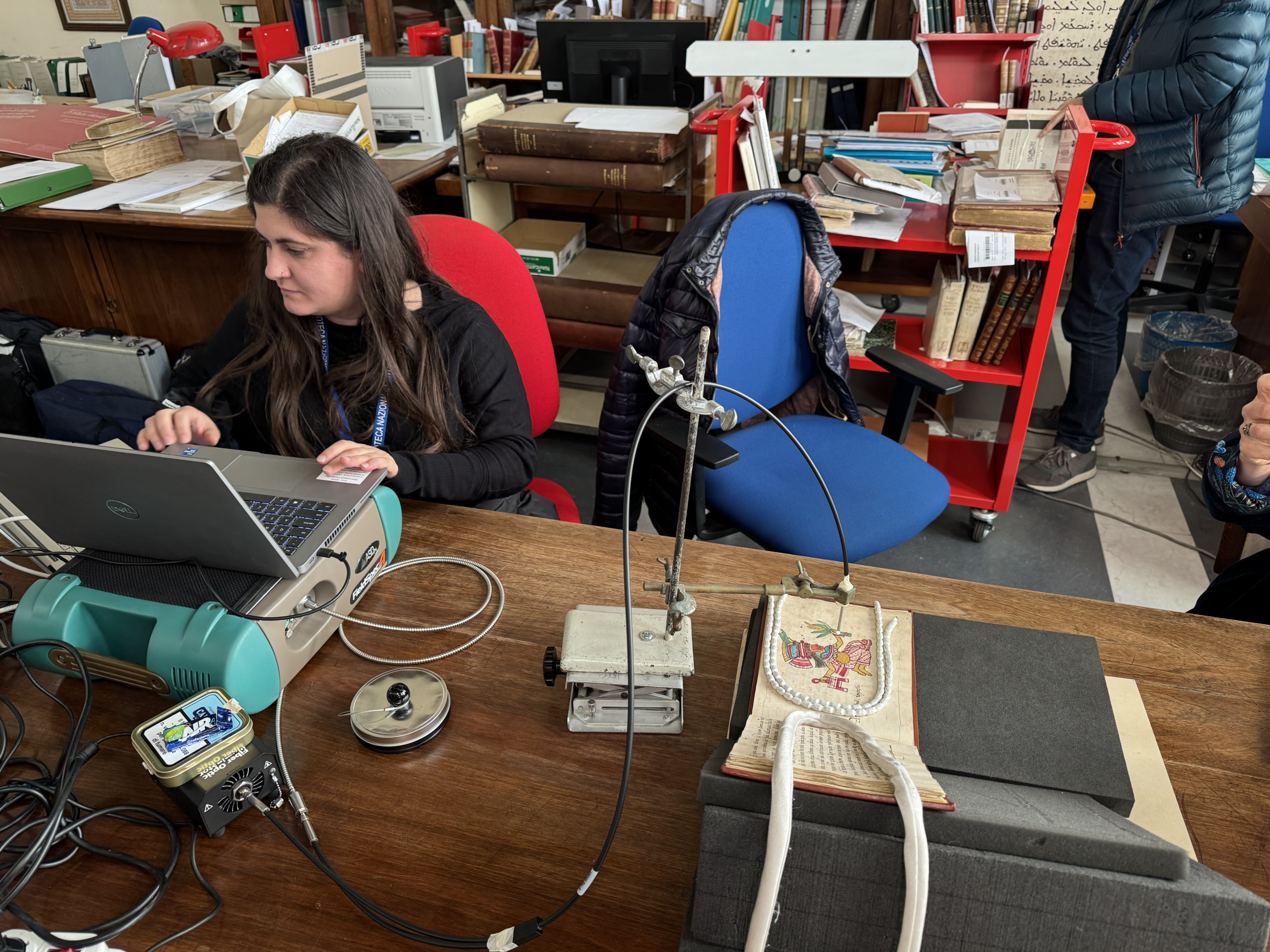
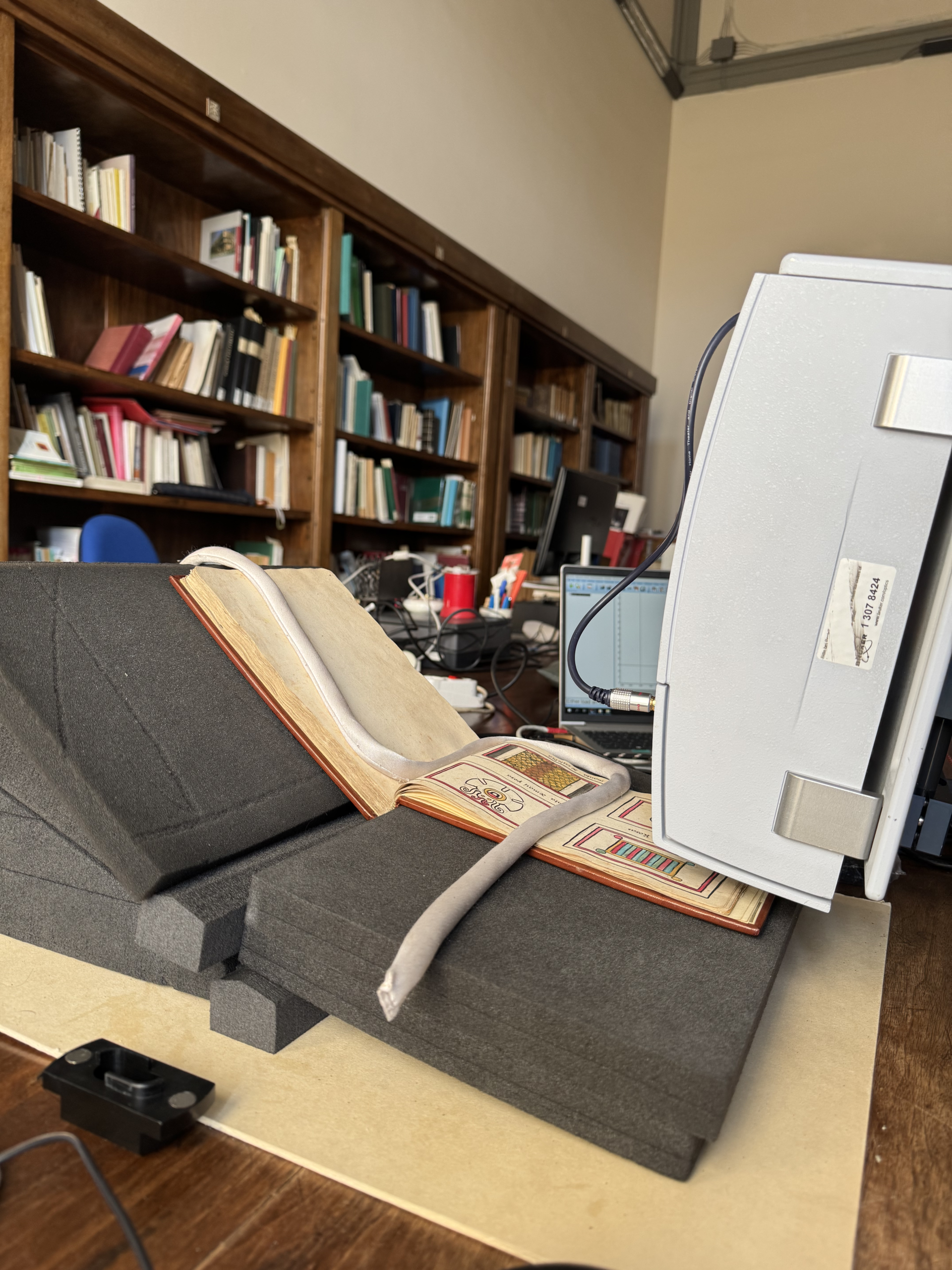
From 3rd to 7th of March 2025, KNOT carried out an advanced non-invasive diagnostic campaign on the Codice Magliabechiano (Banco Rari 232) at the Biblioteca Nazionale Centrale of Florence. The campaign was coordinated by David Buti, technologist of CNR ISPC, as part of the project’s programme of scientific research on Indigenous cultural heritage in Italian collections.
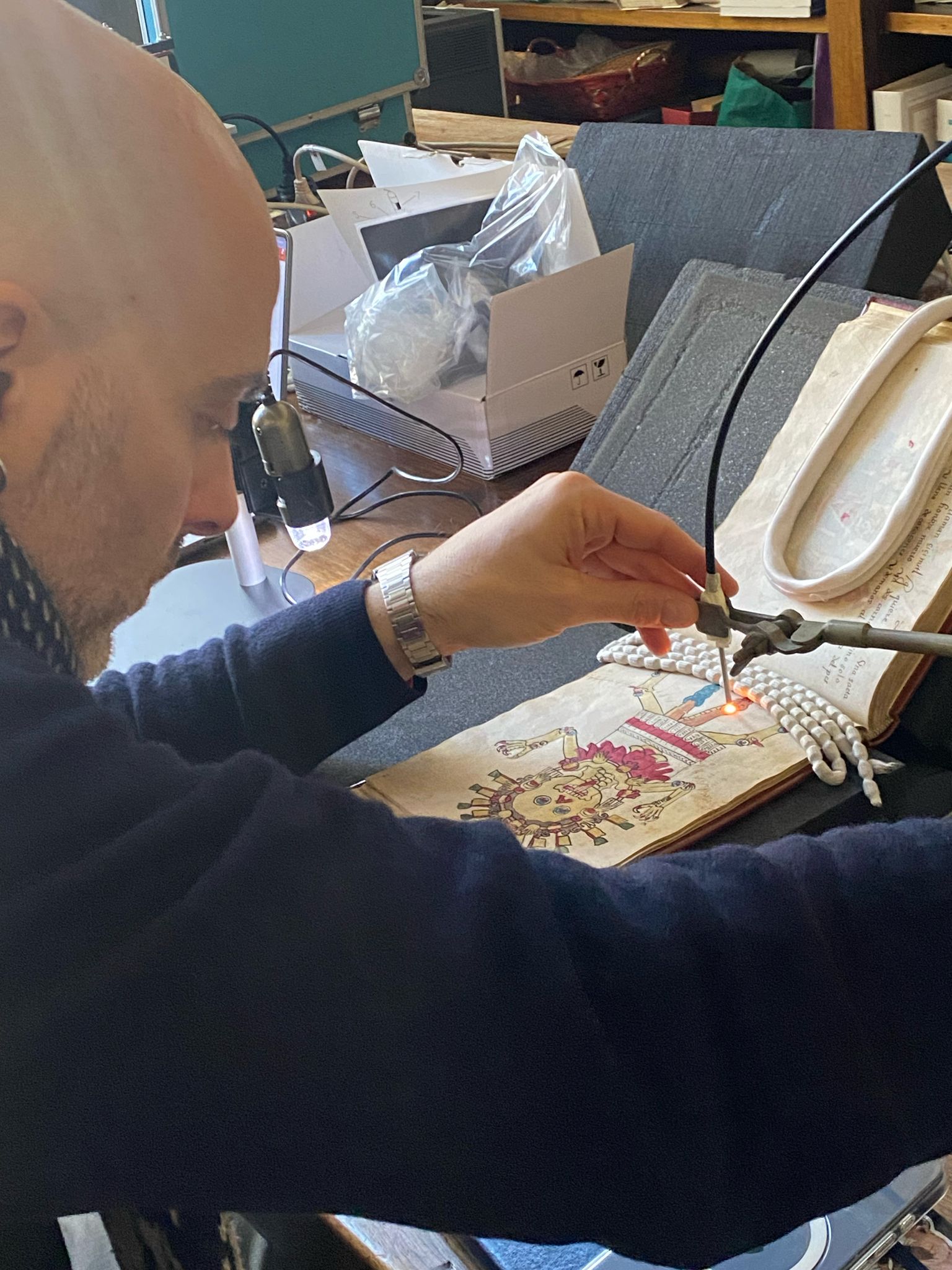
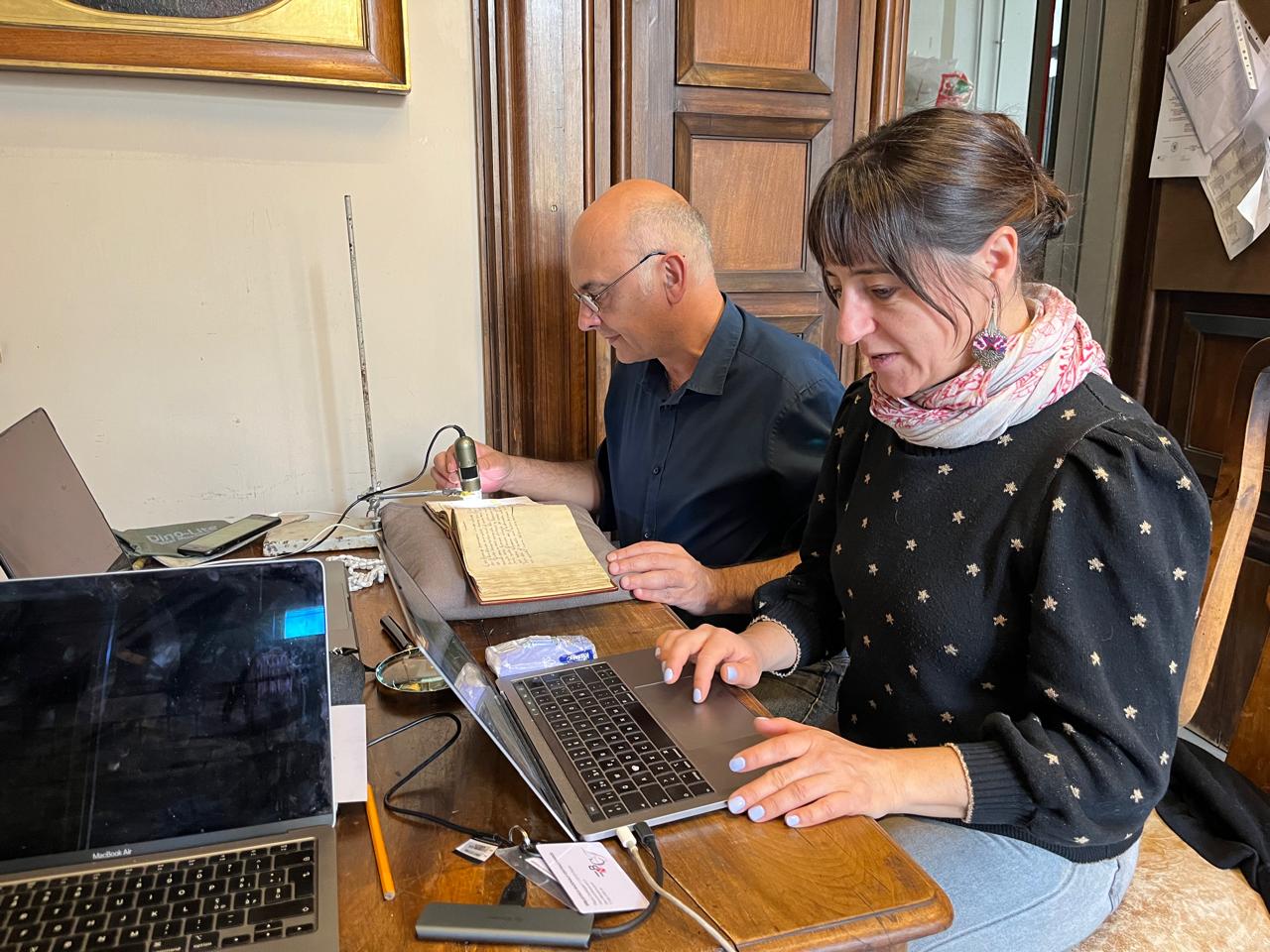
Prior to this week of MOLAB investigations, a preliminary campaign was carried out to inform and guide the scientific work. This phase was led by Élodie Dupey García (UNAM, Mexico), a specialist in Nahua culture and colour in Mesoamerican manuscripts, together with Davide Domenici (University of Bologna), a member of the KNOT research team. Through in-depth visual examination of the codex combined with detailed digital microscopy recording of selected pages, this initial study identified key material and chromatic features to be targeted during the subsequent diagnostic campaign.
The MOLAB investigations were then conducted in collaboration with Sara Mattana (CNR-SCITEC), and with Élodie Dupey García, whose involvement was supported through the international network fostered by the “Hidden Stories” project, an interdisciplinary initiative dedicated to the study of Indigenous and Mesoamerican books through the combined perspectives of scholarship, heritage science and collection-based research in libraries and archives.
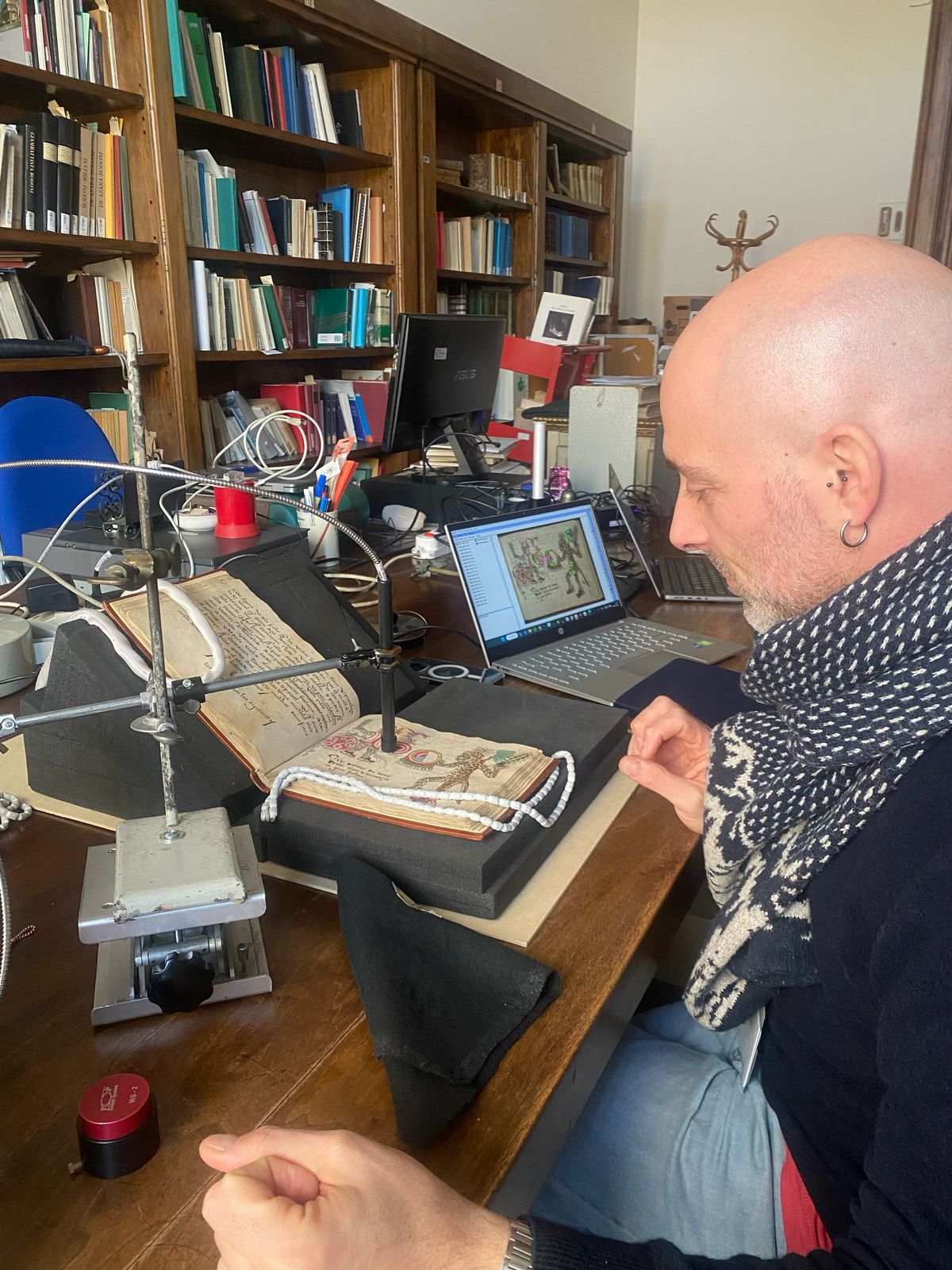
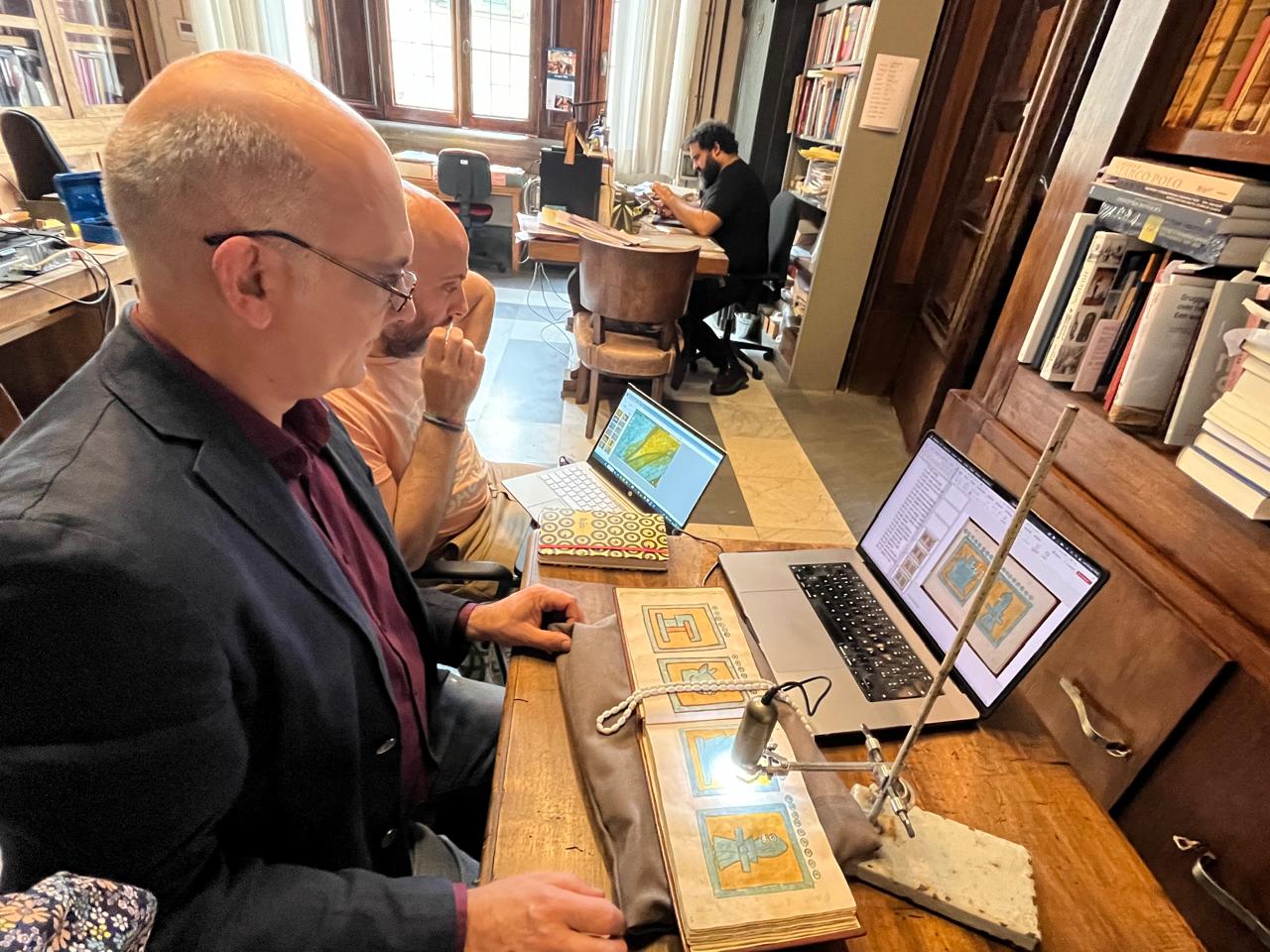
The work was carried out using a suite of state-of-the-art non-invasive analytical techniques, following the MOLAB mobile laboratory philosophy developed within the European Research Infrastructure for Heritage Science (E-RIHS). These included digital microscopy, UV–VIS–NIR reflectance and fluorescence spectroscopy, Raman and FTIR spectroscopy, and visible reflectance hyperspectral imaging. Together, these methods made it possible to characterise pigments, inks, supports and surface features of the manuscript without any sampling or physical alteration.
Hands-on examination of the Codice Magliabechiano combined close visual inspection with digital microscopy and spectral imaging, allowing the team to document both the material stratigraphy and the chromatic complexity of the manuscript in unprecedented detail.
The results obtained in Florence will contribute to future comparative studies, digital resources and dissemination activities developed within the KNOT project.